
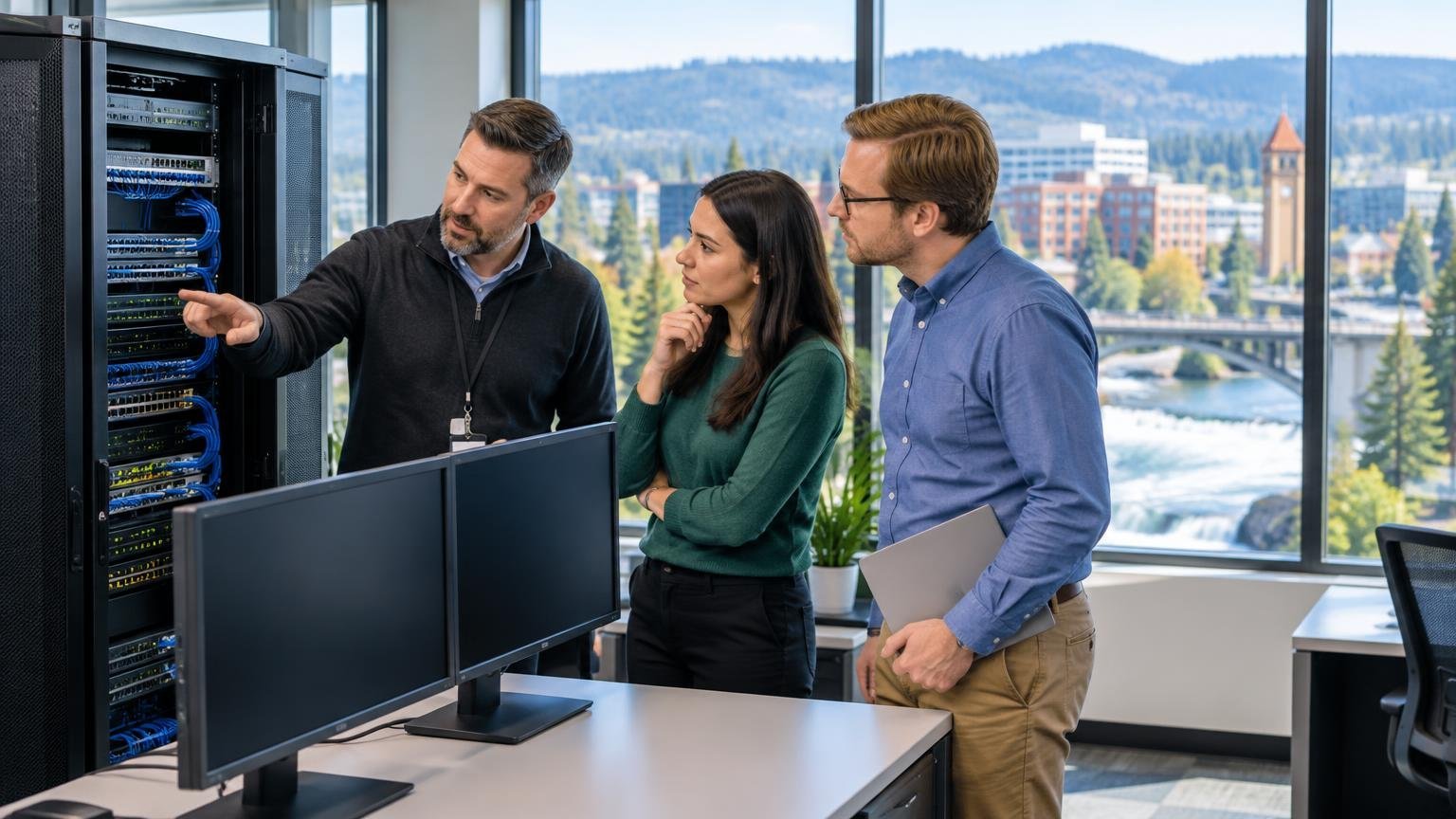
A capable internal IT person can keep a business moving, but they should not have to carry every technology problem alone. When one person is handling support requests, vendor calls, access changes, security concerns, and future planning, small gaps can turn into delays, risk, or burnout.
For businesses with 10 to 100 employees, co-managed IT in Spokane creates a practical support structure around the person who already knows your people, systems, and day-to-day operations. The goal is simple: help technology support patient care, client service, project work, and growth without making one employee responsible for everything.
Your Internal IT Person Should Not Carry Everything Alone
We often see internal IT staff and tech-savvy office managers doing far more than their job title suggests. They may set up new employees, troubleshoot laptops, manage software access, coordinate with internet providers, work with application vendors, and respond when something breaks. That arrangement may work until two urgent needs happen at once.
Warning signs can be easy to miss because the internal person is usually good at finding a workaround. Still, your organization may be stretched too thin when you see issues such as:
- Security updates pushed aside because daily support takes priority
- Recurring problems that never get fully resolved
- Slow response when the internal IT person is on vacation or unavailable
- Confusion about which vendor owns a problem
- Little time to plan for software changes, hiring, growth, or risk reduction
Questions like these can reveal where the pressure is building: Who responds to a ransomware alert after hours? Who removes access when an employee leaves? Who reviews a new practice-management system, construction application, or document platform before it creates support or security problems?
Co-managed IT is not about replacing the internal person you trust. We build a working relationship that gives them backup, deeper technical support, and clearer coverage while keeping their knowledge of the business at the center.
How Co-Managed IT in Spokane Divides the Work
A co-managed arrangement should never mean, “Call us when something goes wrong.” It works best when responsibilities, communication expectations, and escalation paths are agreed upon before a problem occurs.
Your internal IT person usually remains closest to the business. They understand which systems affect patient scheduling, billable work, project delivery, donor communication, or client records. They may continue to lead employee relationships, office equipment choices, software preferences, internal requests, and leadership coordination.
Meanwhile, we can take ownership of agreed areas that need more consistent coverage or specialized attention. Depending on your needs, that may include:
- Security monitoring and patch management oversight
- Backup verification and recovery planning
- User support coverage and after-hours response
- Vendor escalation and technical documentation
- Security reviews, access controls, and regular reporting
The split should fit your organization, not a generic template. A dental or medical practice may need support around HIPAA-conscious access controls and clinical software vendors. A law firm may place more focus on confidential documents and secure remote access. An architecture, engineering, or construction firm may need help with large files, field connectivity, and specialized applications.
Our role is to strengthen the areas where your internal person needs coverage, time, or technical depth. Their role remains meaningful because they know how your organization actually works.
Set Clear Ownership Before Issues Become Emergencies
Clear ownership prevents duplicate work, finger-pointing, and uncertainty when a serious issue appears. We recommend starting with an ownership matrix, a plain-language document that shows who handles which responsibilities and who makes final decisions.
That matrix can cover onboarding and offboarding, password resets, software installs, hardware purchasing, system changes, backup checks, vendor management, security incidents, and executive reporting. It should also name a backup contact for times when your internal IT person is unavailable.
Escalation matters just as much as ownership. Routine issues may stay with your internal person or our support team, depending on the agreed model. A larger issue, such as an email compromise, network outage, critical application failure, or compliance concern, should move quickly to the right technical and leadership contacts.
Shared documentation supports that process. Accurate records of systems, vendors, administrator access, recovery procedures, and key contacts help protect the business when staff changes occur. They also reduce the risk of relying on one person’s memory to keep operations running.
With those guardrails in place, employees know where to get help, leadership knows who is accountable, and internal IT can spend less time chasing preventable confusion.
Add Security Guardrails Without Taking Away Control
Small organizations are expected to protect sensitive information with care, even when they do not have a full security department. For one internal IT person, keeping up with support work and security oversight can be difficult.
We help create practical guardrails around the systems your team manages. Those may include multi-factor authentication standards, secure access rules, email protection, endpoint monitoring, vulnerability reviews, backup testing, and account access reviews. The tools are not the point. The point is reducing avoidable exposure and improving your ability to recover when something goes wrong.
Visibility should remain with your internal IT person. Shared dashboards, regular security reviews, documented incident steps, and clear notification rules help them understand what is happening and why. Co-managed IT in Spokane gives internal staff access to broader security experience without shutting them out of the process.
This approach can be especially helpful for regulated and professional-service organizations. Healthcare practices need technology practices that support HIPAA-conscious operations. Law firms need to protect confidential client information. Nonprofits may need to safeguard donor records while working with limited resources. AEC firms need to protect project documents, bids, and client communication across office and field environments.
Bring Strategic Help to Growth and Compliance Decisions
Ticket resolution is only one part of IT support. When your internal person is consumed by daily requests, leadership may not have a reliable sounding board for technology decisions. That can lead to rushed purchases, unsupported software, unclear compliance exposure, or systems that become harder to manage over time.
As a Technology Success Partner, we bring outside perspective to planning conversations while respecting your internal team’s judgment. Regular discussions can focus on staffing changes, office moves, software replacements, budget planning, risk reduction, and technology roadmaps.
For example, a medical practice may be adding providers or opening another location. A law firm may be considering a more secure document-management platform. An engineering firm may need better support for hybrid staff and large project files. A nonprofit may need stronger access controls before adopting a donor system or applying for a grant.
A shared plan helps technology support security, compliance readiness, and sustainable growth instead of becoming a barrier.
Give Your Internal IT Team the Backup It Deserves
The right co-managed model gives your internal IT person coverage, clear authority, useful documentation, stronger security support, and room to focus on meaningful work. A paid IT and security assessment can help identify unclear responsibilities, recovery risks, documentation gaps, and areas where internal and outside support should work together.
Before choosing a model, look closely at what happens when the internal person is unavailable, when a security issue appears, or when leadership needs to make a technology decision. Those answers will show whether your team has dependable backup or is relying too heavily on one capable person.
Give Your IT Team Reliable Backup
Co-managed IT in Spokane gives your internal IT lead access to experienced support, security guidance, and technology planning when priorities compete. ITO Nexus can start with a paid IT and security assessment or a discovery conversation to clarify where added coverage will have the greatest impact. Our monthly-only licensing keeps the arrangement flexible, without a long-term lock-in.