
Turn Your Firewall Into a Business Advantage
A firewall used to be something you installed once and forgot about. That does not work anymore, especially for small businesses and healthcare practices that depend on stable, secure access to data every single day. The firewall now sits in the middle of how your team works, how your patients and customers are served, and how your risks are managed.
When a firewall is unmanaged or poorly managed, problems usually stay hidden until something breaks. That might look like an outage on a busy clinic day, missing logs when your cyber insurance asks for proof, or a compliance gap you only find during a HIPAA or PCI review. At that point, you are reacting instead of leading.
We believe firewall management should be treated like any other core business system. It should be driven by clear KPIs, backed by practical SLAs, and reviewed on a steady monthly rhythm so leaders can make informed decisions instead of guessing or hoping everything is fine.
What Modern Firewall Management Should Actually Deliver
A modern managed firewall is not just a box that was sold to you, plugged in, and left alone. It is an ongoing service that keeps your perimeter tuned to how your business actually runs.
At a minimum, true firewall management should include:
- Continuous monitoring of alerts, logs, and health
- Regular rule tuning so policies match current users, apps, and risks
- Patch and firmware updates planned around your schedule
- Reporting you can understand, not just raw log dumps
- Coordination when an incident happens, including clear next steps
All of this needs to tie back to your real goals, not just technical checklists. For most Spokane businesses and healthcare practices, that usually means:
- Keeping uptime steady so revenue operations stay on track
- Protecting PHI and PII in a way that aligns with compliance expectations
- Supporting hybrid and remote staff with stable VPN access, even during busy seasons
The right partner should bring local context as well as technical skill. That includes awareness of regional threat patterns, how the local healthcare and small business ecosystem works, and how staffing and budgets actually look here. It also means clear ownership of who does what, and how firewall work ties into your broader technology roadmap instead of sitting on its own island.
The KPIs That Show If Your Firewall Is Doing Its Job
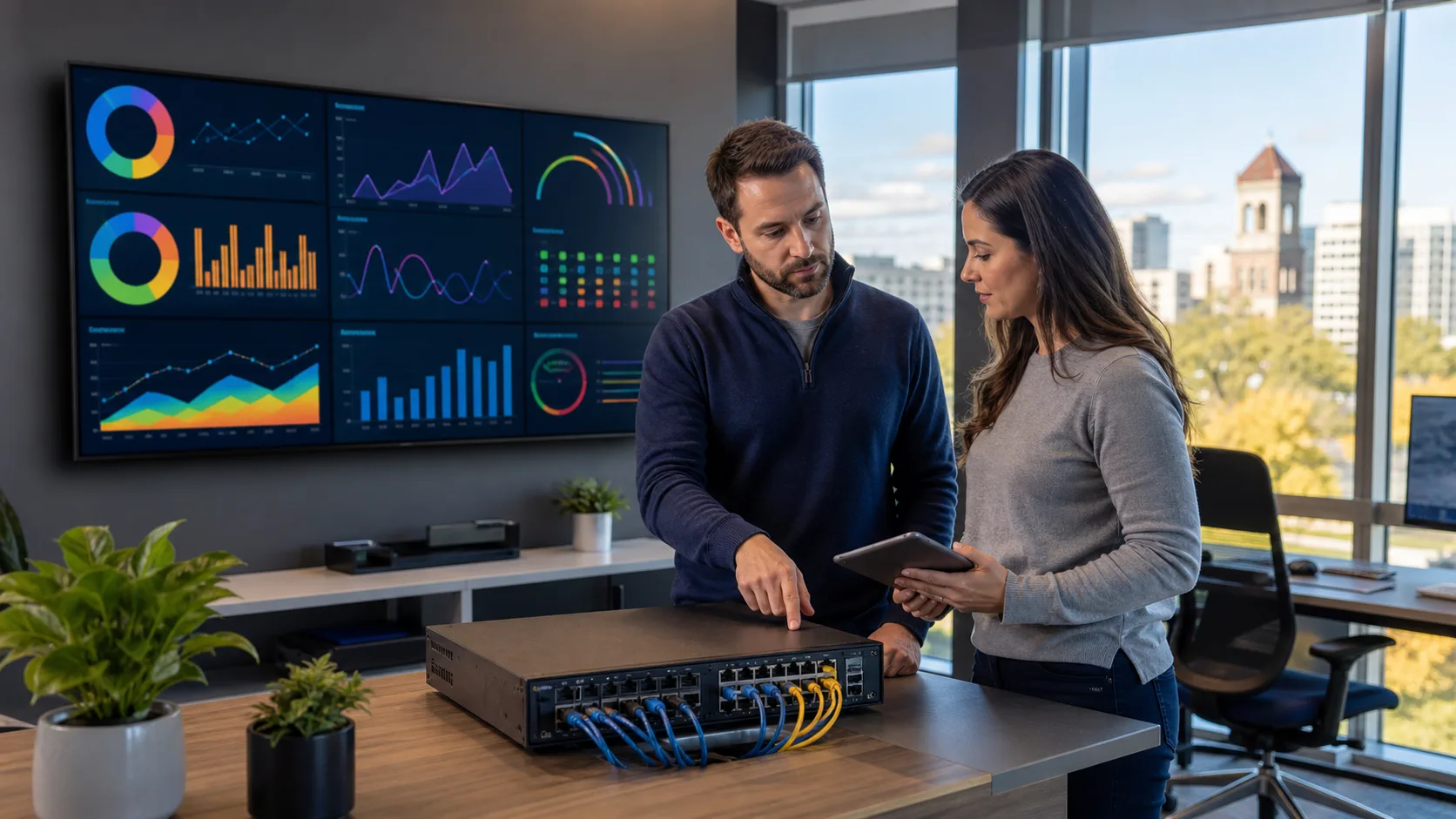
If you do not measure your firewall, you cannot manage it. KPI-driven reporting turns a black box into a simple dashboard that shows whether your security posture is moving in the right direction month over month.
We suggest tracking at least these core KPIs:
- Blocked threat volume and trends
Look at malware blocks, intrusion attempts, and geoblocked traffic. The raw count matters less than the trend and whether spikes match changes you made, such as new staff or new systems.
- Policy change frequency and approvals
Every firewall rule change should have a clear “who asked, who approved, and why.” Tracking the volume of changes helps you spot risky patterns, such as frequent urgent changes or rules that get opened quickly but never reviewed.
- Incident response timing
Time to detect, time to respond, and time to contain show how well your monitoring and processes work. When you adjust alerts or staffing, you want to see these times improve, not slip.
- Availability and performance
Firewall uptime, failover events, and VPN performance for remote staff show whether security is hurting or helping productivity. Too many failovers or slow VPN speeds can point to configuration or capacity issues.
For executives and practice managers, these should roll up into clear summaries, such as red/yellow/green status, simple trend graphs before and after key changes, and risk scores tied to business impact, not only technical jargon. You should be able to glance at a monthly report and answer, “Are we safer, the same, or worse than last month, and why?”
Setting Realistic, Business-Focused Firewall SLAs
A firewall SLA is your safety net. It defines how fast your partner responds, how changes get handled, and how often you see reports. Without a clear SLA, expectations drift, and frustration grows on both sides.
For firewall management, a strong SLA usually covers:
- Response times for different alert levels
- Standard change windows and how to request them
- Escalation paths if an issue is not resolved quickly
- Reporting cadence and review meetings
For small businesses and healthcare practices, that often breaks down into:
- Critical incidents
Clear response targets during business hours and after hours, so you know how long you might be running on backup workflows if the firewall is affected.
- Routine change requests
Adding users, updating VPN access, and modifying rules should have reliable turnaround times so onboarding or new vendors do not stall.
- Maintenance windows
Firmware updates and planned reboots should be scheduled when they will cause the least disruption, and you should know about them before they happen.
To make SLAs work, they must match your reality. Clinic hours, production shifts, seasonal rushes, and compliance audit timelines all matter. When those timeframes are on the table, your firewall does its work in the background instead of becoming a bottleneck right when you can least afford it.
What to Audit Every Month on Your Firewall
A monthly firewall audit keeps small problems from turning into big ones. Threats change quickly, people move roles or leave, and new apps get adopted without always looping in IT. A light but steady review helps you stay ahead.
A good monthly audit usually includes:
- Access rules
Remove unused rules, tighten any that are overly broad, and confirm you are still following least-privilege access. Every rule should have a clear purpose that still makes sense.
- User and VPN accounts
Disable accounts for former staff, confirm multi-factor authentication is in place where it should be, and double-check third-party or vendor access is still required.
- Logs and alerts
Make sure alerts are firing as expected and not being ignored. Tune thresholds so your team sees what matters without drowning in noise.
- Configuration and firmware
Confirm recent backups of firewall configs, check for pending firmware updates, and verify high-availability or failover settings still match your environment.
Your managed provider should package all this into a brief monthly report. At a glance, you should see:
- What changed and why
- What was fixed or cleaned up
- New risks discovered or trends spotted
- Clear recommendations for the next 30 to 90 days
This turns the firewall review into a regular leadership touchpoint, not a once-a-year scramble.
Choosing a Spokane Partner for Firewall Management
Picking the right partner for firewall management services in Spokane can shape your security posture for years. You are not just buying tools; you are choosing who will watch the gate and help guide your overall IT strategy.
Helpful questions to ask include:
- How do you measure and report firewall KPIs for business leaders, not only IT staff?
- What does your SLA look like during holidays and after hours?
- How do you support compliance needs like HIPAA, PCI, or cyber insurance requirements?
- How often do you hold technology alignment or roadmap meetings?
You want signs of a strategic partner, not a break-fix vendor. That usually looks like regular alignment meetings, firewall work connected to broader cybersecurity and cloud plans, and clear advice on how network security supports your growth goals.
Local knowledge matters too. A Spokane-based team that understands regional threats, local healthcare and business ecosystems, and real-world budget limits can give more practical guidance than a one-size-fits-all service.
As a managed IT and cybersecurity partner based in Spokane, we at ITO Nexus focus on aligning, securing, and modernizing technology so small businesses and healthcare practices can grow with confidence. Turning your firewall into a measurable, SLA-backed, and regularly audited asset is one of the smartest steps you can take before the next quarter arrives.
Protect Your Network And Keep Your Business Running Strong
If you are ready to close security gaps and reduce downtime, we are here to help. At ITO Nexus, our team will assess your current environment, recommend improvements, and implement reliable protections tailored to your organization. Explore our firewall management services in Spokane to strengthen your defenses and support business continuity. Partner with us today to gain a more secure, stable, and predictable IT foundation.